
Many people live by the maxim that if you fail to prepare, then you are preparing to fail. This is especially important during an IT job interview. As well as your standard set of interview questions, IT interviews will contain many specialist questions. Employers may be interested in questioning you on your skills, qualifications and coding languages.

To avoid being thrown off track, preparing possible answers can be really beneficial to your interview success. See below for some of the questions you can expect during an IT job interview.

About You

Firstly, expect general questions about you so the interviewer can get to know each candidate. For IT job interviews, this may also include questions on your technical skills and experience. This will help employers build an idea of you as both a person and employee.

You may be asked a series of questions including:

  • Why is this job position of interest to you?
  • What qualifications do you currently hold?
  • Which programming languages can you confidently work with?
  • What experience do you hold in using automated-build tools or processes?
  • What experience do you have in source control tools?
  • How do you keep up to date within this industry?
  • What were your responsibilities during your most recent project?
  • How would you score your time management skills with meeting deadlines?
  • Provide an example of a time when you were able to improve an original design from a client.

You could also be asked problem solving questions to test your knowledge, skills and professionalism. This may concern faulty code, spreadsheets and data bases, working with clients, and IT challenges in your previous projects.

Industry Knowledge

Next, employers will check that you have completed your research. Asking you questions on the job and company will help them to see how you will fit with their business.

You can expect to be asked a selection of the following questions:

  • Which skills of yours make you qualified for this job position?
  • If hired, what challenges would you expect from this role?
  • Who do you consider as our biggest competitors in this industry?
  • Following the job description, what do you expect your daily tasks to be?
  • How important is it to you to develop professional relationships with business users?
  • How would you describe your production deployment process?

A number of these questions could easily catch you out if you are not prepared. Therefore, we strongly advise thorough research into the job vacancy, company, industry and even their competitors. After all, in-depth research can help you to plan more original answers better suited to you.

Technical Ability

The following questions are all designed to test you on your skills and knowledge as an IT professional. Your interviewer will be determining your compatibility for the job role and company based on your answers. Therefore, it will be especially useful if you also prepare examples of past work to link to your answers. This will demonstrate experience, understanding and great potential.

  • How do you guarantee quality in your deliverables?
  • What experience do you have with Eclipse and Visual Studio?
  • What percentage of your working hours do you spend on unit testing?
  • Are you able to define what a transaction log is and how they should be used?
  • What is the term “honey pot” used for in network security?
  • Can you compare the similarities and differences between SOAP and REST web services?
  • With the original code you develop, how do you reuse and how much are you able to reuse?
  • What would you consider to be the most essential metrics for database performance and how do you monitor them?

Questions for Your Interviewer

Showing interest by preparing questions to ask can make a great impression on employers. Therefore, preparing questions for your interviewer is also key. Possible questions you could ask are:

  • What is the company’s greatest achievement to date?
  • What size is your IT team currently?
  • What are your biggest challenges as an IT company?
  • What development process do you have in place?

Applying for IT Jobs

As recruitment specialists, the Certes team are the match makers of the IT industry, pairing motivated applicants with compatible employers. To browse job vacancies in your area and secure an IT job interview, click here.

Have you thought about working in the public Sector and what is involved? We hear people talking about Security Clearance; Most Public Sector organisations will require some sort of clearance, but do we really understand the levels of clearance, the process and the time it takes to obtain?

Certes have been working within the Public Sector for over 30 years and we still get asked about the security clearance process on a daily basis. Understanding the clearance levels and process can take some time to get your head around.

For IT professionals seeking roles within the Public and Defence sectors, it’s important to understand that security clearance must be given before the assignment can begin. Candidates must undergo differing levels of Government security checks, dependent on the role, to ensure that they don’t pose any risk to national security when working with sensitive assets.

Whilst security clearance takes time and certainly requires a lot of paperwork (particularly for higher levels of clearance), success in security clearance can result in many benefits, including job security, and plenty of IT opportunities within the Public Sector.

How to get Security Clearance

To obtain a Security Clearance an individual will need to have a sponsor; this will be the organisation that is requesting the clearance.  Security Clearances are carried out by UKSV (United Kingdom Security Vetting) UKSV previously called DBS NSV (Defence Business Services National Security Vetting) if your role is dependant on Security clearance, you will not be able to start until clearance is obtained, however, depending on the role and the organisation, you may be able to start with a lower level of security whilst the higher level is being processed. This means you may have restricted access to site or the need to be escorted until clearance is granted.

Levels of Security Clearance

There are four main types of security clearance:

  • Baseline Personnel Security Standard (BPSS)
  • Counter-Terrorism Check (CTC)
  • Security Check (SC)
  • Developed Vetting (DV)

Baseline Personnel Security Standard

BPSS includes the Baseline Personnel Security Standard and the Enhanced Baseline Standard (EBS) and is required for higher level security clearance. BPSS acts as a pre-employment check to ascertain how trustworthy and reliable a prospective candidate is, whilst EBS acts as a pre-cursor to higher level, more in-depth security checks.

Counter-Terrorism Check

CTC is a security check to prevent people with who may have connections to terrorist organisations, or who may be vulnerable to pressure from terrorists, from gaining clearance to sensitive information that may be compromised.

This level of security clearance is usually required by IT professionals working for the Police, Legal Agencies and Government agencies hiring contractors.

Security Check

SC is the most common level of clearance and applies to IT roles that require access to secret or top-secret assets. Security check clearance is transferable between different government departments and can cover a wide range of Public Sector jobs, including IT, Health, Government, Defence, MoD and the private sector.

To gain SC clearance, candidates will usually need to have been a UK resident for a minimum of 5 years and will be required to complete the following stages of vetting:

  • Baseline Personnel Security Standard
  • Departmental/Company Records Check
  • Security Questionnaire
  • Criminal Record Check
  • Security Service Check

SC will usually take up to 13 weeks to complete and is valid for 5 years for contractors, or 10 years for permanent employees.

Developed Vetting

DV is the highest level of security clearance for IT professionals in the Public Sector. Candidates in DV cleared roles have substantial access to top-secret assets, without supervision, and/or work closely with Government security and intelligence agencies.

Developed Vetting applies to IT positions within the Government, Defence, MoD and Aerospace. Checks are highly specialised and job specific. Stages of vetting include:

  • Baseline Personnel Security Standard
  • Criminal Record Check
  • Departmental/Company Records Check
  • DV Questionnaire
  • Credit Reference Check and Review of Personal Finances
  • Security Service Check
  • Check of Mental and Psychological Information

In addition to these checks, DV candidates will normally have been a UK resident for a minimum of 10 years and must also undergo an individual interview and further enquiries. Character referees, and current and previous employers or supervisors will also be contacted in writing, by telephone or by interview.

As a result of the high level of clearance granted by Developed Vetting and the in-depth checks carried out, clearance takes between 12 to 18 months to complete, so candidates should refrain from handing in their notice to current employers until clearance is given.

DV aftercare may also be required for some positions for risk management purposes. The validity of DV clearance is valid for a pre-determined period, after which, it must be reviewed.

Why would I be refused a Security Clearance?

Once you have completed the paperwork and submitted, your application will be processed and reviewed, it is important to remember that your clearance could be refused at any time and for any reason.  These checks are carried out to ensure you are suitable for a specific task and to provide assurance that the individual is trustworthy holds no threat and have a verifiable background, if for any reason upon processing the clearance application anything is flagged the application can be refused.  Some examples as to why a clearance could be refused are:

  • Financial irregularities- CCJ or high volumes of debt – could make an applicant a target for bribery.
  • Gaps in employment history that cannot be explained or confirmed are a reason for refusal.
  • Employment records – any indication from an employer that the individual is untrustworthy or a risk to security are also a reason for refusal.
  • Any indication in security service records that an applicant or any of their family members have any links to radical groups, espionage or terrorism could allow the vetting unit to refuse clearance.

If you are interested in applying for a security cleared IT jobs in the Public Sector, or have queries about security clearance, call +44(0)1675 468968 or contact us online.

An IT Analyst is responsible for the design, analysis and implementation of efficient IT systems. They have a clear understanding of business and technological needs and collect user feedback to further improve their systems.

In addition to prioritising user requirements, an IT Analyst is also responsible for managing system upgrades and researching new tools. Therefore, this requires an analytical mind, clear communication and strength in problem solving.

In terms of career experience, proven experience in a similar role and project management is essential. A BSc/BA in related courses to Engineering and Computer Science are also required, for sound knowledge in system security, databases and troubleshooting.

Job Responsibilities

Your responsibilities as an IT Analyst will cover a variety of duties and will involve communication with different teams within the business. From overseeing IT projects to compiling data into sophisticated reports, your job responsibilities as an IT Analyst may include:

  • Communicating with stakeholders on their requirements
  • Collecting feedback on system performance from end users
  • Designing, analysing and implementing technology solutions
  • Integration of systems to meet team needs
  • Analysis and development of functional specifications
  • Management and planning of overall projects

To support you in your daily work, it is also essential to keep up to date with relevant developments in technology. As well as expanding your knowledge, this may also assist you in creating more efficient and cost-effective systems for your place of work.

Possible Career Routes

There are a variety of sectors you can look in to for IT careers as an analyst. These can vary in duties, to cater to different business needs. Some roles may require you to compile data reports and train teams, whereas others may have more of a focus on customer service. Different job titles can include:

  • Service Desk Analyst
  • Data Business Analyst
  • Test and Implementation Analyst
  • Application Support Analyst
  • Digital Business Analyst
  • Finance Business Analyst
  • Business Analyst
  • Evidential Analyst
  • Business Intelligence Analyst
  • IT Business Analyst
  • Cloud Support Analyst
  • Infrastructure Analyst
  • Network and Infrastructure Analyst

How to Apply

As IT recruitment specialists, we have the expertise to assist companies in fulfilling their staff needs. With a range of IT careers ready for applications, we can help find the right candidate for the right job. Whether you are a new graduate or a senior executive, we can help you find the next step on your career path.

With a 30 year success track record, Certes is the go-to platform for careers in IT. We currently have a range of IT Analyst vacancies available across the UK ready for applicants. To apply, visit our vacancies page for more information.

Overview

IR35 changes already implemented in the Public Sector back in April 2017 are due to be implemented in the private sector from April 2020 – this will be the most significant disruptor to ‘contracting’ for a generation and the potential impact and costs for business is huge, inevitably there will be winners and losers.

Certes experience of working with Public Sector organisations and Ltd Company contractors (PSCs) to successfully manage changes to working practices post IR35 positions us to help Private Sector businesses to:

  1. Understand that significant disruption lies ahead between now and April 2020
  2. What the key issues and challenges will be
  3. Guide and support organisations to plan for the change to de-risk the impact to Business, Projects and ultimately profits… Yes, it could be that serious!

Before going any further I think it’s worth taking a look back at what’s happened and what’s driving the changes.

So, what is IR35?

IR35 legislation was introduced in 2000 and was designed to tackle tax avoidance from what HMRC believed to be ‘disguised employment’; where self-employed ‘contractors’ set up a Limited Company (PSC) to provide their ‘services’ but worked in a similar way to full-time employees, just in a more tax efficient way.  In general, there are 3 commonly accepted principles that inform whether a contract is IR35 compliant:

  1. Supervision, Direction, Control – this relates to how much say a client has over how a contractor completes the work. For example, working at certain times, this implies employment
  2. Substitution – could you bring someone else in to complete the contract, or do you need to do the work yourself? If you can’t send someone else, you’re likely to be within IR35
  3. Mutuality of Obligation (MOO) – is there an obligation on the employer’s end to offer work, and do you have to accept it? This is called mutuality of obligation, and if it exists, the contract will fall within IR35

There are of course many other factors, most typically non-contractual, which also influence IR35, including; equipment, financial risk, payment schedules and exclusivity.  These factors will be considered by HMRC during an investigation as they review the ‘working practices’ associated with any engagement.

What happened between 2000 and the Public Sector changes in 2017?

Well, contracting became VERY popular across all industries and sectors, from Professional Services (e.g. IT, Legal) through to Admin and Clerical (e.g. Data Input) and even hotel chamber maids!

The growth of contractors’ operation via PSCs was driven by multiple factors, including, but not limited to:

  1. The convenience, flexibility and savings businesses can make by not employing someone directly
  2. The growth of specialist sectors such as IT and the demand for niche skills
  3. Legislation including AWR came along in October 2011, giving temporary workers the same basic T&C’s as permanent staff (holiday pay etc)
  4. People wanting a more flexible work life balance and realising that this dream could be achievable for them by opting out of corporate life… Seeing others make the change successfully and enjoy the financial freedom and lifestyle encouraged others to make the change
  5. The government realised just how big the increase in Personal Service Companies (PSC) had been which are simply Ltd Companies owned and controlled by an individual who are commonly referred to as ‘contractors’

Between 2000 – 2017, contractors themselves were responsible for evaluating and determining their IR35 status, and so it’s no big surprise that the overwhelming majority came to the conclusion that they were outside of IR35 regulations – we all know Turkeys don’t vote for Christmas!

Market dynamics were working (for government, business and contractors), so why make changes?

In a word – MONEY – the government (led by HMRC) believes they are missing out on £££ millions/billions in lost tax receipts.  I’ll leave it to financial experts to debate whether this is the case or not, but either way, the change is coming.

What are the changes?

It’s important to be clear that IR35 legislation hasn’t changed.  The key ‘game changer’ is the ‘engager’ (business) has the responsibility for ‘determining’ whether IR35 rules apply to the ‘individual’s services’ rather than the PSC (contractor).

Okay, this sounds simple, so what’s the fuss all about then?

Simply, it’s about Risks and Financial Penalties and the likelihood of getting caught by HMRC.

Historically there’s been hundreds of thousands of PSCs for HMRC to identify and investigate, so by changing the onus to the ‘engager’ to make the decision, they’re able considerably ‘close the net’, give themselves a better chance of identifying non-compliance and increase the taxman’s returns by going after big business.

The penalties for non-compliance are significant – the “engager” will be liable to pay taxes and NICs to HMRC, plus any penalties. The risks and penalties are why many Public Sector organisations took a ‘blanket approach’ to deem their contractors inside of IR35 – in a scenario where you have 50+ contractors working for you, the consequences of getting IR35 decisions wrong can quickly run into £millions.  Plus there’s also the matter of a reputational risk and a PR disaster – being caught and finding your businesses name in the media for all the wrong reasons!

What are the options for private sector businesses?

  1. Carry on as you are and do nothing – highly risky and likely to cause significant disruption later on
  2. Stop using contractors by April 2020 – likely to have massive implications for any medium/large business and probably not practical if you want to stay in business and survive
  3. Evaluate how you can manage the risks and disruption and make the necessary changes to minimise costs and continue focusing on delivering your core priorities

What are the challenges I need to consider?

Most businesses are likely to take option 3 and some have already started to consider and work on how they are going to manage the change.  For those who have not considered this, now is the time to start.

There’s a huge amount of ‘noise’ on social media about the problem, but not too much practical advice, so it’s time to share some our experience of the problems and challenges faced by the Public Sector:

  1. Compliance and Audit Risk
    • Implementing a documented process for evaluating IR35 status
    • Administrative cost of IR35 assessments
    • Managing the disruption prior to April 2020
  2. Financial costs
    • Increasing costs to retaining existing contractors
    • Calculating and understanding the cost implications of wrong decisions
    • Cost implications of projects being delayed by IR35
  3. Supply chain compliance
    • Do existing suppliers have robust processes for managing IR35?
    • Contractors are moving from Ltd Company (PSC) to Management (umbrella) Companies. Are these schemes compliant?
  4. Contract Management and working-practices
    • Do you hire and manage contractors in the same way as permanent staff?
    • Do contractors work via Job Description just like staff?
    • Do you pay contractors for ‘being at work’ via a timesheet?
    • Mobility of contractors is significantly impacted by inside IR35 status as they lose the ability to claim and offset expenses

The impact of these challenges has been considerable for some Public Sector organisations:

  1. Increasing costs of contractor workforce
  2. Difficulties engaging the key capabilities, skills and experience that are vital for projects
  3. Losing existing key contractors and their knowledge base
  4. Delays to projects and in some extreme cases, projects being stopped or failing completely
  5. Mounting reliance on big consultancy firms – increasing costs further and losing control of critical projects

Ultimately, the Public Sector lost skills and expertise to the Private Sector post the changes back in 2017, but they didn’t have the risk of losing competitive advantage – this is something that will happen in the private sector if businesses don’t prepare appropriately and make the required changes early enough to protect themselves.

How can Certes help you to overcome the IR35 problem?

Our IR35 experience in the Public Sector means we’ve seen the good, the bad and the ugly!  We’ve got Case Study examples which can inform, guide and provide lessons learned to help you approach the challenges ahead.

Most importantly we listened (really listened), using our experience and relationships to design, develop and test our innovative Turnkey Solution, proven to be IR35 compliant and used by a number of Public Sector organisations.

To find out more about how we can help you understand IR35 challenges, plan to manage the changes and implement a solution to the problem, get in touch today.

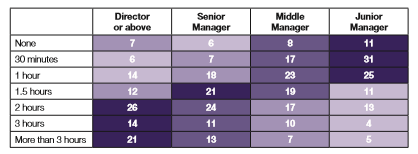
Balancing work and life are important for all employees but it is a difficult task for many. If not balanced correctly it could lead to employees becoming dissatisfied, unmotivated in their role and other negative impacts on life can occur such as lack of exercise, increased stress levels,  little social lives, psychological and physical health problems. A survey from Managers.org.uk focuses on the working hours of managers goes into detail about “Managers’ working hours in a digital era”.

According to the survey, managers are working extra hours and this trend has continued to rise since 2012.

“Managers’ contracted working hours have risen by one hour daily compared to 2012, which is equivalent to an additional 29 days extra each year. That’s more than the typical annual leave entitlement. Overall, 92% of managers work longer than their contracted hours. This pattern has resulted in a third of managers feeling ‘overloaded’ and a perception that long working hours are something they have ‘no choice’ about.”

A majority of managers are working between 41 to 48 hours (38%) with 23% of managers working beyond that, between 49 to 59 hours.

Depending on the seniority of the manager, the extra hours worked changes. Junior managers will tend to work an extra 30 minutes over contracted hours while Directors and above will work an extra 2 hours over contracted hours.

Despite the extra hours worked, under half (42%) of the managers surveyed do not feel overburdened with their workload. However, a third (33%) of managers feel that they are overloaded with work.

What is surprising is that while 63% feel that they have no choice to work the extra hours to meet deadlines, 54% work the extra hours by choice.

Being in a digital era and technology working alongside us in our daily work tasks, we were led to believe that work would be more efficient and our work lives would be made easier. However, technology has enabled an ‘always connected’ environment when away from our place of work and has also influenced the working hours.

Staying connected has also affected managers ability to maintain their work-life balance as being constantly connected makes it difficult for them to ‘switch off’ and leave work at work.

“61% of managers say that technology has made it difficult to switch off from work. Around one in five managers say they now check their email all the time outside of working hours; over half (54%) check frequently. This is particularly common among those in senior management positions.  Whilst not perceived unfavourably by all managers, constant email accessibility and digital connectivity mean longer working hours for some.”

?

Though technology is not the root of increase work hours, the ability to access work life while at home is a contributor.

The survey does not specify the industries that the managers are working within but IT managers and those working within the IT industry have to ability to work remotely. Employees within the IT sector have the power to access a multitude of areas without having to physically be in a specific location and this also opens the doors to working extra hours a to rectify problems or to meet deadlines.

Source: Managers.org.uk

All computer science jobs are not created equal. That degree might qualify you for a number of different jobs in technology. But how do you know which one is the best for you?


Computer Jobs
Source: ComputerScienceZone.org?


We are becoming more and more connected. Being able to control home equipment away from the home and working away from the office. All of this makes our lives easier and encourages us to be more efficient.

We are all aware that an always connected society has its negative points to coincide with the smorgasbord of pros. With personal details and company data being accessed through cyber attacks hitting the headlines over the years, there are growing concerns and a need for cyber security professionals to help protect companies and their customers from cyber threats.

Knowing that there is a need for cyber security professionals, how can you improve your chances of being hired for a cyber security professional role?


Analytical skills

Strong analytical and diagnostic skills are sought after in a cyber security professional. The ability to dig into technical questions and scrutinise them from all sides


Knowledge

The nature of cyber security environment is constantly changing; the professional will need to possess the ability to keep current knowledge of existing and new Internet vulnerabilities.

You will also need to have knowledge of a number of the following:

  • Open Source Applications
  • Linux Operating Systems
  • Microsoft Technologies
  • Wireless Technologies
  • Database Modelling
  • Web Application Technologies
  • Compiled and Interpreted Development Languages
  • Network Implementation (Operational and Security)
  • Telephony Technologies (Analogue and IP)
  • Social Engineering
  • Physical Security

Ideally, you would need to have knowledge of at least three or more of these areas.


Communication skills

Every role requires excellent communication skills and this is also desired from cyber security professionals. Cyber security professional need to effectively communicate with either the management team or customers in order to explain any issues that have appeared and what steps can be made as well as what actions are going to take place. Be clear and concise.

These skills can apply to any jobs but for a career cyber security, you should consider these skills as a must have.

Technology is equipping learners with the ability to work effectively and access resources on the move, but it’s not just students that can benefit

Technology is changing every industry and vocation, meaning students must be equipped with the skills to take ownership of their own learning and adapt to the current trends in the world of work.

Just as businesses have implemented the cloud to empower their employees with added resources and flexibility, schools must also adopt similar solutions to prepare their students for the future.

While giving students hands-on experience of modern technology is important from a development perspective, the expectations of digitally native learners means education institutions must deploy the right solutions now in order to stay relevant. As competition to recruit students increases, academies and universities in particular are turning to technology to differentiate.


Anywhere learning

As a starting point, with today’s students used to consuming online services through a range of different devices, there is a growing expectation for schools and universities to deliver their resources in a similar way. While the majority of universities have provided course materials online for some time, this is only the tip of the iceberg.

As cloud computing is particularly useful for supporting multiple devices, education providers should aim to provide the majority of their services using this technology, allowing students to work effectively whether on smartphone, laptop or tablet.

For example, by having access to all systems on all devices, students can access reading materials, edit documents or submit assignments in any context they choose – whether this is during the commute to class or during an unexpected quiet period.

In addition to expanding the amount of time available for learning, this also removes limitations on the level of resources at any given time, enabling students to access more information based on the direction of their research.

This way, students will be able to input new ideas depending on where their research takes them and learn how to find the answers from themselves.

However, this does not just benefit the students’ alone. To give an example, Sorring Skole, a primary school in Demark has brought in Chromebooks for the third to sixth grade to take the learning experience to the cloud.

By hosting documents and learning materials on a cloud server, teachers have been able to access data from practically anywhere, enabling more efficient assessment and appraisal processes, and removing the risk of lost documents or results.

Teachers can also provide feedback over cloud services, enabling a quicker turn around on marking materials, freeing up time for teachers to concentrate on educating rather than administrate tasks.

As a result, by selecting systems that give users secure access to their data and applications wherever they are, the cloud can provide an enhanced learning experience while reducing demands on staff services.


Learning across boundaries

In addition to providing flexibility on devices and location, the cloud enables teams to work together in ways that were never possible before. For example, by using services that enable multiple users of a single document, such as Google Docs or Microsoft Office, this can enable teams of students from within a classroom, or from across the world, to work on the same project.

By becoming a member of a virtual team, students can experience a range of different cultures and influences, setting up a more immersive and innovative learning environment.

Through the introduction of AV technology provided through the cloud, teachers also have the ability to interact with their counterparts across the world, in order to share methods and information, or even introduce guest lecturers into lessons via video conferencing.

For example, by working with institutions overseas, teachers will be able to provide virtual tours of distant locations or host Q&A sessions with experts on certain topics. As a result, in addition the providing flexibility, utilising cloud technology can also create a much more diverse learning experience, which provides students with new avenues to exercise their team-working abilities.

By having the tools to enhance collaboration in this way, teachers will be better equipped to train their students for the demands on the workplace, while having the ability to inspire debate amongst the students themselves.


Keep IT simple

Aside from the direct educational benefits, the arrival of cloud technology also creates huge benefits for the IT departments from an economic perspective. By utilising off-premise computing power, IT departments within education institutions are able to free up their server from the burden of maintaining databases, running applications and storing information – effectively expanding the capabilities of their own PCs.

By moving standard services such as email and ERP systems to the cloud, this can free up more resources to concentrate key functions such as research and education meaning resources are used much more efficiently. As software on the cloud is also delivered through flexible subscriptions, this means it is often cheaper than upfront licenses and leaves.

Of course, in order for this to be successful, the cloud solutions and devices that are chosen must be easy to use and integrate seamlessly with the rest of the business, while having a high level of security credentials.

When looking for solutions, education providers should therefore consider which operating systems would be the most user-friendly, which classroom management tools are required and what level of support is required to support these cloud systems.

With the right mix of mobile devices and cloud software, schools and universities will have the tools to prepare the students for the future.

Source: Information Age

We have seen what consultants look for in candidates, but this is a two way street. Candidates expect many things from the agencies that they interact with. Here, candidates who have used agencies share what they look for in an agency. Certes have asked  people who have dealt with agencies to find out thier views and what they look for.


“The most important thing that I look for in an agency is the ability to provide me with regular work that suits my needs i.e. workplaces within reasonable commuting distance, that treat employees and agency workers well. The agency should provide access to both long and short term roles and provide career professional development opportunities so that I am able to continue to enhance my skills while working for them. Agency recruitment staff should be friendly and have good interpersonal skills that make it clear that they are focused on finding you the right job opportunities. Agencies should contact you regularly with job opportunities that may be of interest to you based on their knowledge of your needs and requirements”.

Anonymous, Science Teacher

“As a job seeker and speaking with numerous agencies, the agencies that I return to are the ones that actually make an effort to contact me personally with new opportunities that match my skills. Multiple time agencies have notified me about openings that are not what I am looking for and that makes me feel that they are not interested in my needs and are only trying to fill jobs. An agency that takes time to find out what my ideal job is and informs me of any jobs available that fit what I want is what I look for in an agency”.

Andrew Robinson

“An agencies main job is to place people in jobs. I feel that this help should extend further, such as advice. Problems that I and other people may have come across are CV’s that are not up to scratch. Agencies should recommend changes to CV’s that would help improve chances of being selected for vacancies I have applied for. I know Agencies go through hundreds of CV’s a week, they are the best person to go for advice and tips to improve a job seekers CV”.

Kalvin Higgins, Alloy Refurb Specialist

“I work within IT and as such I possess many technical skills. The agencies that I go to need to have knowledge of these skills, if they don’t I have no faith that they will find jobs catered to me. As well as industry knowledge, agencies should keep me up-to-date on the progress of my application. There’s nothing more frustrating to me when dealing with agencies than being informed of a job that they think I would be perfect for and that I have applied to, to not hear anything back. A phone call or an email to let me know if I have been considered by the employer with feedback would help. This would give me information on what employers are looking for and would also give me a chance to see the areas that I may need to improve on in both my skills and CV”.

Imran Ebrahim, IT Manager


“Having the option to do an interview over the phone is something that I look for in an agency. Some agencies that I have used have asked me to come into their offices for an interview. I do not have a problem with making the journey but when the agencies are located in different regions of the UK it can be difficult to make the journey, for instance, travelling to Manchester from the West Midlands. Agencies should be aware of my location to where there office is so we can either arrange a mutual meeting location or we can arrange a time where we can discuss my background and what I am looking for over the phone.”

Anonymous, Marketing Executive

The ‘curriculum vitae’: the most important tool for anyone looking for their next career move. It chronicles all the previous roles that you have worked and details the skills and achievements that you have gained throughout you working career. It’s the first thing that employers see and is the key element that can get you closer to your dream job, enticing the employer that they should pick you over the other possible candidates.

Depending on whether you are going for a permanent role or a contract role, CV’s will tend to differ.


Permanent CV

The general rules of thumb for permanent candidate CVs are that they should be no longer than 2 pages in length. Any more and it is unlikely that your CV will be read. This will be difficult if you have had multiple jobs roles in your working career and will be a problem for Millennials and Generation Z who have the trait of ‘job hopping’ within 2 to 4 years. If you are struggling for space, focus on detailing the most relevant jobs. Unrelated posts should be as short as possible. For Example:

Shop assistant                   Clothes Shop                    Jan 2000 – Dec 2003


The format of a permanent candidate CV should be:

•    Name and contact details

•    Personal statement

•    Employment history and Achievements

•    Education/Qualifications/Courses

•    Key Skills

•    Hobbies and Interests

•    Brief Summary


Contract CV

Contract CVs are a completely different ball game. Due to the nature of contract work where employment is based on short-term employment for a particular project, the length on a contract CV could be up to 4 pages.

Contract CVs are specialised and targeted to the role that the contractor is applying for. The first page will be dedicated to grabbing the attention of the employer. For a contract CV, the skills that the contractor possesses would be front and centre after their personal details.

Sections for your GCSE results and your hobbies are generally not included in a contract CV and a summary will usually take the place of the aforementioned sections.

A contractor may have multiple CV’s, each focusing on different skills and tailored towards different vacancies depending on what role they are applying for. The format for a contract CV should be:


•    Name and contact details

•    Brief summary

•    Key Skills

•    Education/Qualifications/Courses

•    Employment History and Achievements

•    Personal details


What’s the same?

Permanent and contract CVs are not all that different, both CV’s need to be laid out in a way that keywords can be found by the employer and employment history should be displayed with most recent first, going a descending order. You want to catch the eye of the employer, but refrain from using garish fonts and colours. Keep the format consistent throughout but be professional.

Grammar and spelling are highly important and a must for both permanent and contract CVs. Get familiar with you spell checker to make sure all your spellings are correct.


Conclusion

Although the layout of the contract and permanent CV’s are different, the basic information in the CV is the same. Contract CVs will generally have more information about previous roles due to the nature of contract employment but CVs will have the most important details right from the start.